Overview
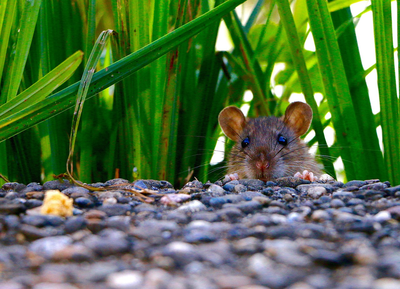
In this lesson, students will be introduced to the 'anchoring phenomenon' of rock pocket mice, specifically how the color of the fur coat changed because of the change in the environment where they live. Students will explore a computational model of a population of rock pocket mice and observe changes in the population over time.
Standards
Next Generation Science Standards
Computational Thinking in STEM
- Data Practices
- Analyzing Data
- Manipulating Data
- Visualizing Data
- Modeling and Simulation Practices
- Using Computational Models to Find and Test Solutions
- Using Computational Models to Understand a Concept
- Computational Problem Solving Practices
- Troubleshooting and Debugging
- Systems Thinking Practices
- Investigating a Complex System as a Whole
- Thinking in Levels
- Understanding the Relationships within a System
Credits
Unit co-designed by Sugat Dabholkar in consultation with teachers at Schurz High School
Acknowledgement
This lesson is based on a curricular unit developed by HHMI (https://www.hhmi.org/biointeractive/making-fittest-natural-selection-and-adaptation).
Activities
Student Directions and Resources
In this lesson, you will study a phenomenon about a population of rock pocket mice. You will explore a computational model of a population these mice and observe changes in the population over time. By the end of the lesson, you'll be able to explain how the color of fur coat of mice changed over time and how it may have been affected by the change in their environment.